
What to Do With Remodeling Debris
Debris management is a scheduling problem, not a disposal one. Get the timing right and it never becomes visible; get it wrong and the garage becomes the skip.
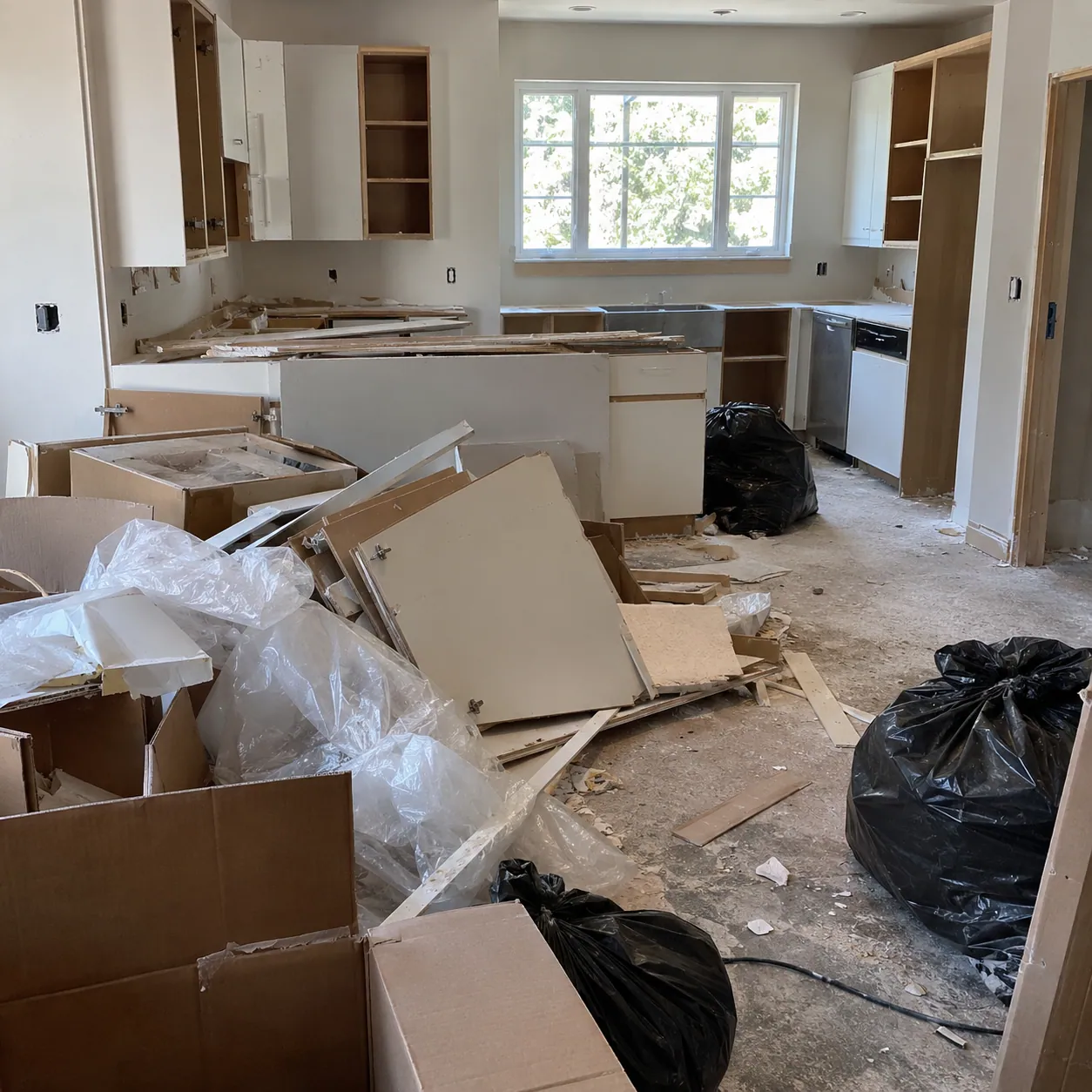
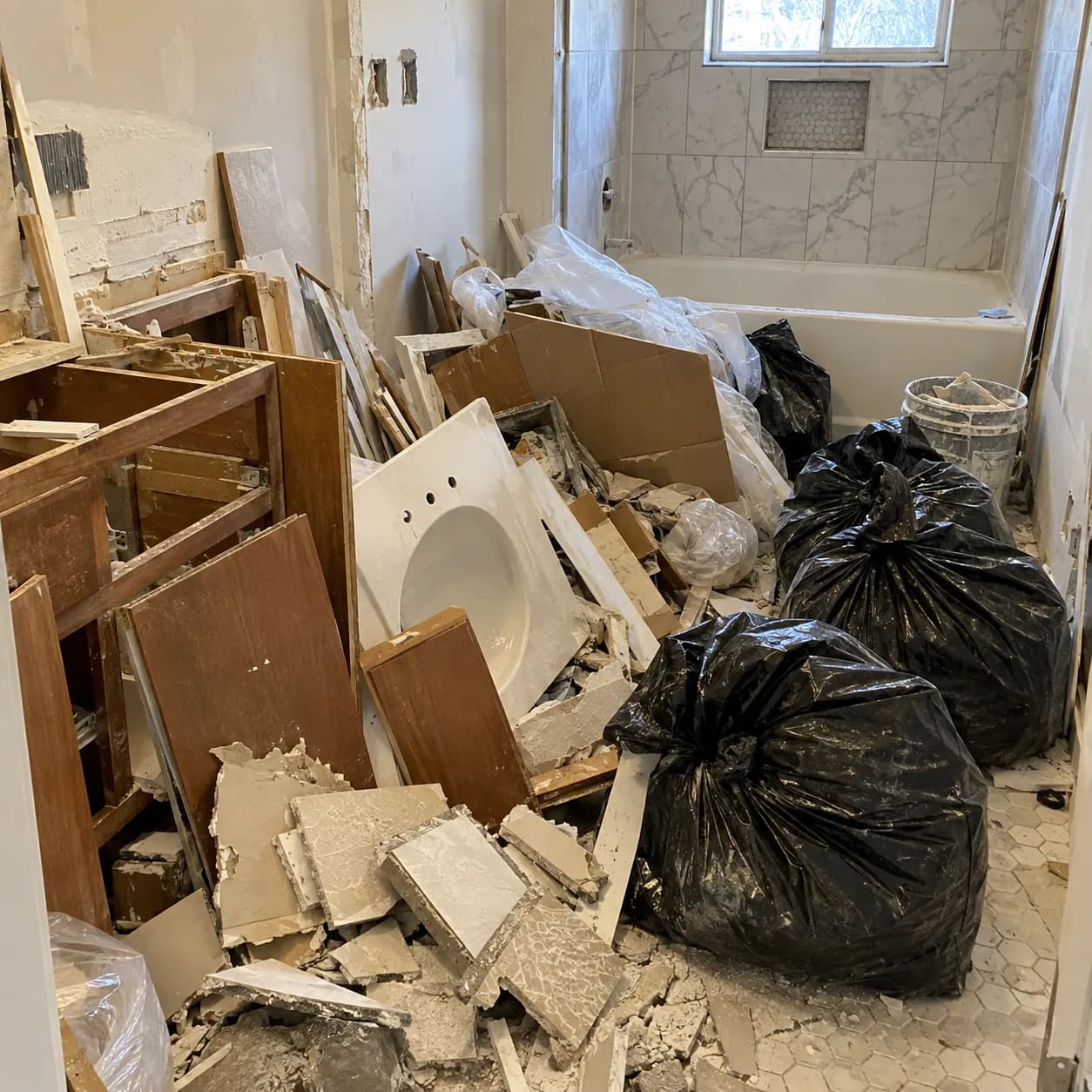
Renovation waste does not arrive at a steady rate. Demolition day produces a week of volume in an afternoon, then it goes quiet, then cabinets arrive with a pallet of packaging, then flooring adds its own layer.
Planning a single end-of-project clear-out means carrying the peak volume for the whole project — which is the version that slows trades down and generates neighbour complaints in an occupied Plano street.
Time pickups to the waves
- 1
Day after demolition
The single biggest load. Booking this in advance is the highest-value scheduling decision in the project.
- 2
After the deliveries land
Cabinet cartons, appliance packaging and pallets. Bulky, light, and it fills a driveway fast.
- 3
End of each trade
Offcuts are complete and the space is briefly clear, which is the easiest moment to load.
- 4
Final clear
Protective sheeting, leftover material and site waste, before photographs or handover.
Staging it well
Pick one staging point and use it consistently — a corner of the garage, a defined area of the driveway, or a single room. Debris spread across four locations turns a one-hour pickup into a two-hour one.
Bag the small material if it is convenient. It is not required, but a bagged load moves considerably faster than a loose one, and speed matters when you are working around a family living in the house.
Keep the dense material separate if you can. Tile, plaster and stone are priced with weight in mind, and it helps to have them visible rather than buried.
The one thing to settle before demolition
Properties built before the 1990s can contain asbestos — commonly in floor tile, tile adhesives, pipe lagging and textured ceiling finishes. This applies to plenty of housing in east Plano, Carrollton and around the McKinney square.
Test before demolition rather than after. Suspected asbestos needs a licensed abatement contractor, and no junk removal truck can lawfully take it.
FAQ
Questions on this
- Is it cheaper to do one big clear-out at the end?
- Not usually. The same total volume costs roughly the same whether it moves in one visit or five, and spreading it keeps the site workable. The exception is a very small project.
- Do I need to bag it?
- No. Loose debris is fine. Bagging speeds up loading, which is worth doing if you are working around an occupied house.
- What cannot go in the truck?
- Asbestos, wet paint, solvents, fuel and pressurised cylinders. The crew will flag anything it finds rather than quietly loading it.
Ready to act on it
Get a price for your actual load
Send photographs and get a number back before you commit. Or book a window straight away if you already know what is going.
Or call (469) 347-3190
- No obligation to book
- Price before we load
- Residential & commercial
The Plano branch
Junk Koala Plano
4013-4017 14th St, Ste 205
Plano, TX 75074