
How to Remove Cabinets After a Kitchen Renovation
Cabinet removal is the first physical step of a kitchen remodel and it sets the tone for everything after it. Done in the wrong order it damages walls, floors and occasionally plumbing.
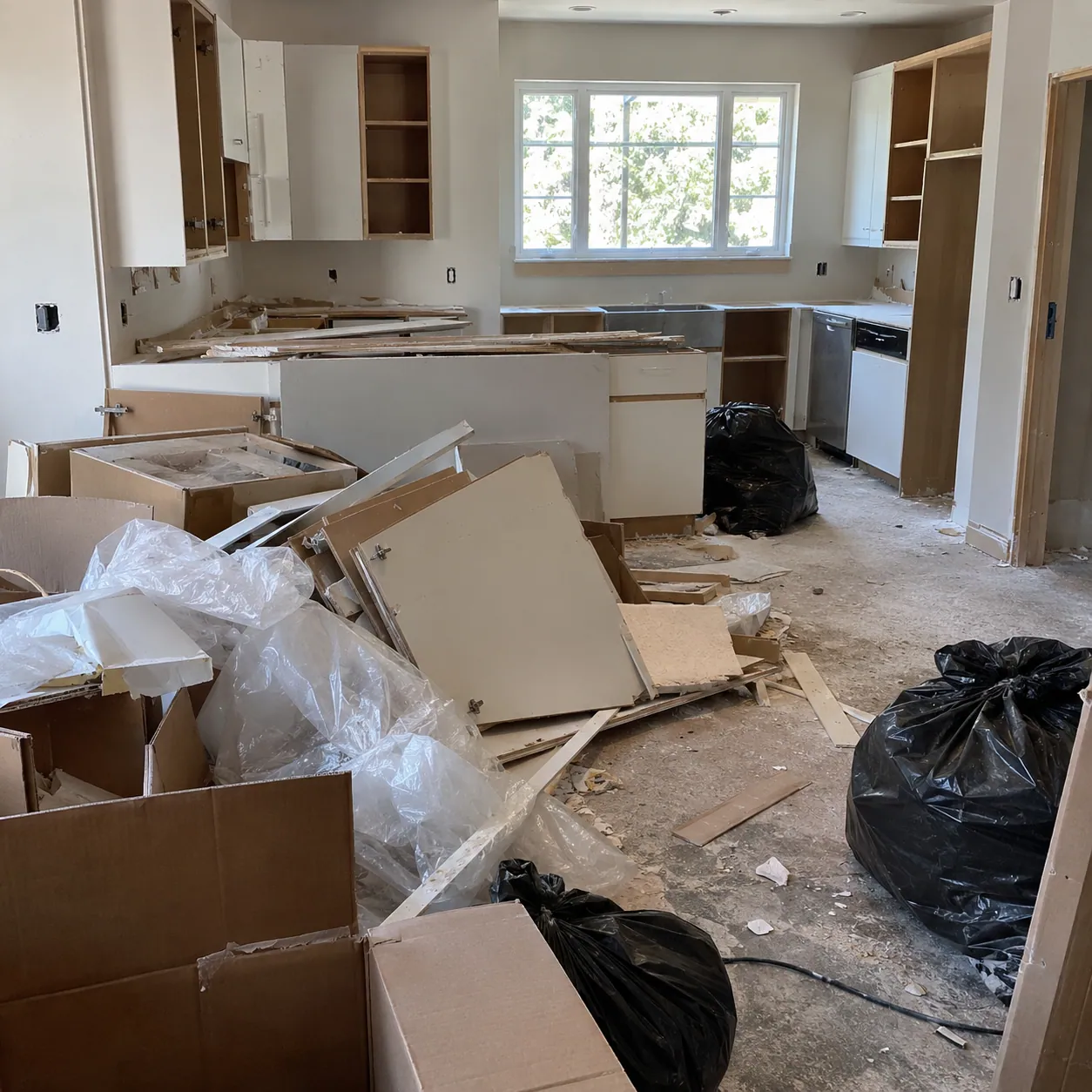
A fitted kitchen is a connected structure. Base units are screwed to each other and to the wall, the worktop ties several units together, and the sink, hob and appliances tie into services. Pulling at one unit before the sequence is right is how a supply line gets damaged.
This guide covers the order and the debris consequences. Anything involving gas or electrical connections needs a qualified fitter — that is a licensing matter, not caution.
The order
- 1
Isolate services first
Water off, electrics isolated, gas capped by a qualified fitter. Nothing else begins before this.
- 2
Appliances out
Freestanding units pull out; integrated ones unscrew from the surrounding cabinetry.
- 3
Doors, drawers and shelves
Strips weight and bulk out of the units and makes them far easier to handle.
- 4
Worktop off
The heaviest single element, especially granite or quartz. This is a multi-person lift.
- 5
Wall units, then base units
Wall units first while there is still floor space. Base units last.
What is worth salvaging
Cabinet carcasses in good condition can occasionally be reused — in a garage, a utility room, or by a reuse outlet. It is worth asking before demolition rather than after, because carcasses removed carefully are salvageable and carcasses levered off a wall are not.
Worktops rarely survive removal intact, particularly stone. Appliances in working order are worth separating; sinks and taps have some scrap value but very little resale.
Realistically most of a kitchen strip-out is debris. The question is only how much of it is separated properly.
What it means for the debris load
| Element | Effect on the load |
|---|---|
| Cabinet carcasses | Bulky, light. Straight volume — the largest space consumer in the load. |
| Laminate worktop | Moderate weight, awkward lengths. Nothing unusual. |
| Granite or quartz worktop | The heavy element. Say so at quote stage — it changes the pricing basis. |
| Wall and floor tile | Dense. Quoted with weight in mind rather than by volume alone. |
| Appliances | Refrigeration carries a disposal cost for refrigerant recovery. |
| Packaging from the new kitchen | Very high volume, negligible weight. Usually a separate visit. |
Book the pickup for the day after
A strip-out load sitting in a driveway is what stops the next trade. Scheduling it in advance is the whole trick.
FAQ
Questions on this
- Can I remove cabinets myself?
- The cabinetry, generally yes with the right sequence and a second person. Gas and electrical disconnection must be done by a qualified fitter, and a stone worktop is a genuine multi-person lift with real injury risk.
- How much does a kitchen strip-out come to?
- Typically half to three-quarters of a truck, and heavier than the volume suggests if the worktop is stone or there is floor tile.
- Will you take the old appliances too?
- Yes, and combining them with the debris is more efficient than a separate booking. Refrigeration carries a disposal cost, shown in the quote.
Ready to act on it
Get a price for your actual load
Send photographs and get a number back before you commit. Or book a window straight away if you already know what is going.
Or call (469) 347-3190
- No obligation to book
- Price before we load
- Residential & commercial
The Plano branch
Junk Koala Plano
4013-4017 14th St, Ste 205
Plano, TX 75074